
It has been four years since Harry Styles released his third studio album, “Harry’s House” and three since his “Love on Tour” came to an end.
During the hiatus from then to now, there were echoes of fans posting “HS4 at midnight” on social media to nearly anything: from another artist reminding them of Styles to seeing him run a marathon in Tokyo.
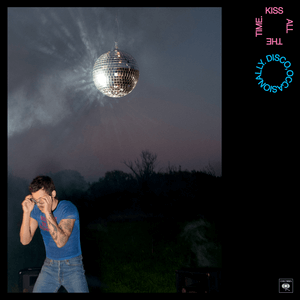
Now, there are no false alarms or delusions. On March 6, “HS4 at midnight” became a true statement to the world when Harry Styles released his fourth studio album, “Kiss All The Time. Disco, Occasionally,” which fans have nicknamed “KissCo.”
Composed of 12 tracks, with a total runtime of 42 minutes, Styles could not have used this time more effectively to addict his listeners.
To produce the record, Styles worked with Kid Harpoon, who has worked with many notable artists, including David Byrne, Miley Cyrus, Kings of Leon and Inhaler. Kid Harpoon has a tendency to produce danceable and compelling records; thus this pairing was a match made in heaven.
Just as “drinks go straight to [Styles’] knees” in “Aperture”, this album goes straight to the listener’s, getting them to jump around and dance.
Aperture
On January 22, new music, “finally appear[ed]” with the lead single “Aperture,” and it is safe to say “it’s only love.”
Defining the “KissCo” era, Styles experimented with a new sound, working with a lot of synth and electronic effects. This track in particular was heavily influenced by LCD Soundsystem.
Styles shared his inspiration from the band in an interview with NME.
“When you’re kind of watching them [LCD Soundsystem] be so like immersed in it, I was, I think the inspiration from them came of like, ‘oh, that’s how I want to feel when I’m on stage.’” Styles said. “And then that kind of led to the kind of music I was making.”
Not only does the song feel immersive for Styles on stage, but it has the same effect for fans in the audience. It feels as though hands up at the club is the only way to experience the disco sound at its full potential.
This addictive disco sound sets the tone for the rest of the album to follow in March, after a long wait from millions.
American Girls
“KissCo” has proven to be no stranger to the dance-around-the-room effect. The second track, “American Girls,” feels like reliving the 2016 Tumblr era all over again.
Styles’ voice begins subtle in the first verse, the bassline taking the forefront, before exploding into the chorus.
As the drums pick up with Styles’ voice, a listener cannot help but at least nod their head along to the beat.
Despite the fun nature of the sound, as Styles repeats the lyric “my friends are in love with American girls,” he reveals the loneliness behind this sentiment.
On an Apple Music podcast, Styles told Zane Lowe, “‘American Girls’ is actually about watching them get married and like, you know, there just is a magic when you find the right person that you want to be with. But I think watching them do that and seeing that it doesn’t come without any uncertainty; it doesn’t come without any risk.”
This feeling is natural as one watches their friends fall in love. While happy for them, it evokes feelings of fear for oneself that often feels better shoved down.
If I had to shove down my feelings about this topic, there is no better way I can imagine than driving for miles with my windows down in the summer, blasting “American Girls.”
Ready, Steady, Go!
The third track of “KissCo,” certainly feels like a countdown that ends with “Ready, Steady, Go.” The track builds up all to the way to the end, where the phrase “Ready, Steady, Go” is repeated.
One of the more experimental tracks on the record, Styles incorporates a lot of synth sounds and reverberation that reflects the confusing nature of a fast-moving relationship. Despite the title, the lyrics quickly reveal neither person in the relationship is actually ready for it.
For some listeners, the song might evoke older songs of Styles’. The bassline is reminiscent of “Music for a Sushi Restaurant” on Style’s grammy-awarded album, “Harry’s House,” at the same time recalling a blues-y feeling like “Carolina” from his self-titled debut, commonly referred to as “HS1.”
Are You Listening Yet?
But are you? “Are You Listening Yet?” As we head into the fourth track of the record, if you are not tuning in to “Kiss All The Time. Disco, Occasionally.” you are going to want to.
Styles revealed on the same Apple podcast that “Are you Listening Yet?” was one of the earliest songs written for the album.
Despite relying on more talking than singing, the song speaks very openly about personal responsibility.
Styles repeats the phrase “are you listening yet?” in the chorus and the outro, so as to not ignore the thoughts and self awareness in your head.
On the track, Styles sings, “Between your head and heart and somewhere else instead/Oh, can you hear the voice, the one inside your head.”
As one listens to Styles’ words, it forces one to think about what their own brain has to say as well.
Taste Back
After getting real on “Are You Listening Yet?,” Styles brings listeners back into a dreamstate with magical, soft synth.
“Taste Back” creates the illusion of a 2010s coming-of-age film for the listener, who yearns for the experience of young romance and finding oneself.
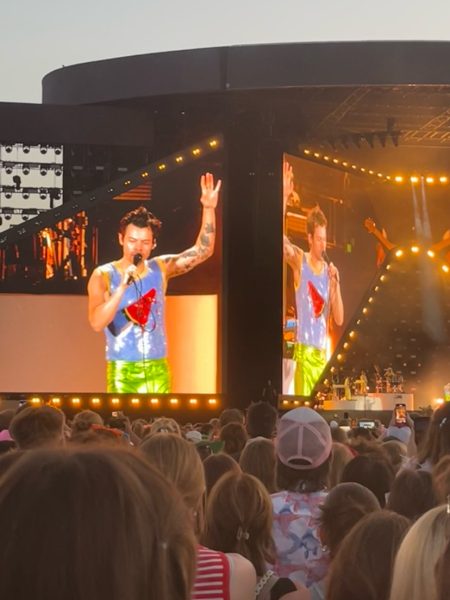
Lacking any concrete evidence, it seems the band Blood Orange, who opened for Styles during his Madison Square Garden residency for “Love on Tour,” had an influence on this record and particularly this track.
Blood Orange excels in the coming-of-age style. Their songs are featured in many films, such as “To All The Boys I’ve Loved Before,” and it appears Styles emulates that style on this track.
“Taste Back” also features a sound reminiscent of Double Standard, an upcoming band who makes a similar style of pop music.
Despite comparisons to other incredible bands and Styles’ own “HS1,” it is difficult not to fall in love with this track.
The lyrics “talk in tongues, no common sense/Likе two old friends,” harkens back to “Two Ghosts,” a song about growing out of who one used to be and the relationship along with it. This is my personal favorite of Styles’ discography, although I cannot imagine myself liking another more, the connection between these two speaks to my heart.
The Waiting Game
After playing “The Waiting Game” with fans yearning for a new album, Styles brought a new take on the game.
As the intro plays, the acoustic guitar (which sounds similar to “The Garden” by Devon Gabriella) leads the listener on another musical journey.
Styles sings about finding someone or something to fill a void while waiting for another, but the placeholder does not truly mean anything.
While sending a serious message, the lyrics cannot help but remind one of the joke of ROLE MODEL (Tucker Pilsbury) filling the void while Styles was on a hiatus.
Styles explained his personal justification of the waiting game to Lowe.
“And you try and you always justify playing the waiting game. You try messing with your own design playing the waiting game, and it all adds up to nothing,” Styles said.
No matter how much one tries to romanticize their life, they cannot cover up the truth behind self-pity or the errors one experiences; yet, Styles masks these feelings behind the music.
Season 2 Weight Loss
Speaking of masking feelings behind music, as I press play on “Season 2 Weight Loss,” I could not help but be thrown off slightly by the intro.
The beginning synthesizer sounds more like a child messing with the keyboard settings, but as the song continues and the synth fades to the background, “Season 2 Weight Loss” reminds a listener more and more of “Sunflower, Vol. 6” off Styles’ sophomore album “Fine Line.”
This track manages to include similar themes of many prior songs, both on “KissCo” and previous albums, but it still feels fresh, rather than regurgitated.
The lyric “it’s hard to tell when the thoughts are my own” calls back to “Are You Listening Yet?,” while the lyrics “let light come in once in a while,” connects more to “Aperture.”
While the callbacks to other “KissCo” songs seem to focus on personal psyche, when it comes to relationships, old habits die hard.
The repetition of “holding, holding out/Hoping you will love me now,” is just a new wording of the song “Satellite”’s “spinnin’ out, waitin’ for ya to pull me in.”
Coming Up Roses
Styles has given listeners some tough pills to swallow with authentic and vulnerable lyrics, but as track eight plays, everything is “Coming Up Roses.”
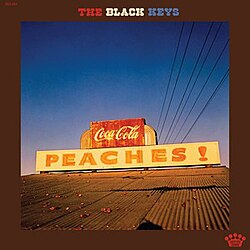
The song was first played on a pre-show playlist at a Fred Again concert, confirming the singer’s influence on Styles’ album “KissCo.”
The strings playing heavily in the intro and subtly throughout make a listener feel as though they are floating into the clouds. Styles once again takes us into the “Taste Back” dreamstate; yet, instead of coming-of-age, the growing up has already happened.
Styles explains the complexities of a relationship between him and another, including worries of misalignment between the two. But in the end, this concern is dismissed with the most important sentiment: “there’s only me and you.”
A first dance at a wedding, when the world revolves around the bride and groom, is the only way to adequately describe the feeling this track evokes. Although the lyrics may not always be the happiest (though not as unfitting of song choice as songs like “Cherry Wine” by Hozier,) in the end, it all comes up roses.
Pop
Serving as a stark contrast to the gentle song preceding this one, Styles brings the “Pop” that defines his discography.
Considering Styles’ previous pop hits “Watermelon Sugar” a
nd “As It Was,” “Pop” is not quite what one would expect; yet, I would call it a pleasant surprise.
While this album has introduced feelings of nostalgia for many decades, this one is the first track to truly touch Styles’ One Direction era. Something about Styles’ voice in the chorus brings one back to songs like “Drag Me Down” and “Rock Me.”
The first impression many formed of this song was on “Brittany Broski’s Royal Court,” where Styles played her track in headphones. Broski played finger-bass as she listened, to which Styles said “that doesn’t represent the music that’s happening at all.”
Styles definitely lied to keep the music a surprise, as the bassline is prominent and brings the song together. The beat has the same effervescent club sound as “Shooting Star” by Audrey Hobert, which brings the listener to life.
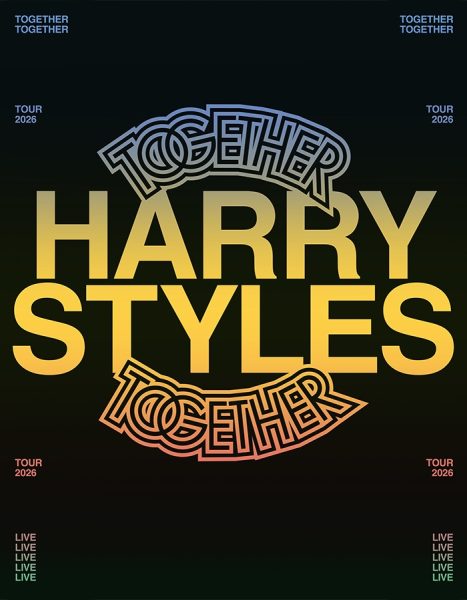
The song does not necessarily shine lyrically, but it does provide the name “Together, Together” to Style’s residency tour, beginning in May.
Dance No More
As if we are not already in over our heads with new music, Styles keeps on delivering hit after hit.
For a song titled “Dance No More,” it is funny to find myself fighting the urge to get up and dance as soon as I hear the opening bassline.
An intriguing factor of this album is the strong use of bass, a defining trait of disco, on most of the tracks.
“Dance No More” is easily the most 80s-started track of the album, with a very David Bowie and Madonna-esque sound. Despite a retro vibe, it also resonates heavily with modern albums, such as “I Like It When You Sleep, for You Are So Beautiful Yet So Unaware of It” by The 1975.
Similar to “Pop,” “Dance No More” is definitely not winning any lyrical competitions, “but the music keeps hitting me like a ten out of ten.”
Paint by Numbers
If you are into emotional whiplash, the sudden transition from “Dance No More” to “Paint by Numbers” is your girl.
The song begins with acoustic guitar, which one might expect to fade like previous tracks, but the acoustic takes the forefront this time.
Likely the most honest, and admittedly sorrowful, of Styles’ discography, “Paint by Numbers” reflects on fame and how sometimes it can feel suffocating.
Specifically, Styles spends a lot of time reflecting on the death of his friend and former band member Liam Payne, who passed away in October 2024.
“I have such strong feelings about my friend passing away,” Styles told Variety. “And then suddenly being, you know, like aware of there’s maybe like a desire from other people of you to convey that in some way, or it means you’re not feeling what you’re feeling or something, you know?”
Styles portrays this conflict, as children and adults alike idolize him and expect certain actions from him, despite not knowing him personally.
The opening line “Oh, what a gift it is to be noticed/But it’s nothin’ to do with me” tells the story enough for a whole song.
Obviously the album was meant for a new sound and experimentation, but I cannot help but miss some of the slower ballads on previous albums. At least trumpet was utilized with a similar solo to “Fine Line.”
Carla’s Song
As Styles’ album closes out, “Carlo’s Song” by Noah Kahan is given a much happier and hopeful younger sister.
“Carla’s Song” also joins the family as an older sister to “Satellite”. The picking, rather than strums, of guitar strings creates a steady beat for Style’s voice to gently come in, much like the aforementioned song.
Styles takes us back to the 70s in the opening line, singing, “There is a bridge that leads to troubled water/If you know, then you know.”
“I played her ‘Bridge Over Troubled Water’ and watching her like listen to it, having never heard that song, felt like I was just watching someone see something in like technicolor discover magic,” Styles explained to Lowe.
Styles captured his own form of magic in this standout track, instilling hope in the listener, as well as reality with synths that sound like record scratches and camera shutters.
The outro of the song feels like direct words from Styles to the listener, as he repeats the sentiment “I know what you like.”
Stemming from the discovery of a new song, “Carla’s Song” perfectly encapsulates living new experiences for the first time. With this track, Styles creates a euphoric version of “Matilda,” as the listener grows up and lets go of their past life.
Styles uses the lyrics “It’s all waiting there for you,” from “Carla’s Song” to describe new music awaiting his fans in his Instagram caption.
Kiss All The Time. Disco, Occasionally.
With years of expectations weighing on this album’s release, it is safe to say Styles delivered more than one could have asked for.
Styles has been receiving some criticism on the album for a lack of emotional depth compared to previous albums, which he addressed in an interview with Haruki Murakami for Runner’s World.
“One of the things I really loved in your book about running was that it freed me from the idea that music had to be an unhealthy profession and I had to be this tortured soul,” Styles said. “Your point is that being healthy makes you able to be an artist for a long time, that you can be a structured, healthy person and make great work.”
Sadness and emotional depth are not synonymous, and Styles certainly made that clear with this album.
“Let light come in once in a while” and give “Kiss All The Time. Disco, Occasionally.” a listen here.