

You and your friends go to a Sabrina Carpenter concert. You are front row but still do not feel close enough. Hearing the music live is not enough; you want to be a part of it.
Whether your passion is set design, photography, management, marketing, making your own music or any of the many different facets of the music industry, it is possible to get closer.
The music industry may feel like a daunting place to get a start in, but if you get to know the turf, it becomes all the less scary. With these tips and tricks on how to involve yourself in the field, you are unburdened and free to focus on your passion.
Ask yourself why you want to get involved
This may seem like a simple task, but it truly does define the career you will have if intend to pursue a career in this field.
Are you genuinely passionate or do you just want to get free tickets to concerts and meet your favorite artists? If it is the latter, the music industry is likely not the place for you. It is not all glitz and glamor; you need to be prepared to put in the hard work.
University of Maryland (UMD) junior Sierra Marsch shared how she was not quite sure about the music industry until she had a conversation with a musician, Del Water Gap. The two of them discussed his experiences as an artist and hers, when he gave her some advice.
“You should consider going into the music industry,” Del Water Gap advised Marsch. “The music industry needs more people like you.”
That was her final push to get involved, and it helped her realize the music industry is also a helping-profession despite what many think. Her ultimate goal is “to help artists’ and fans’ dreams come true,” which she recognized is a service in itself.
Get involved at your school
The easiest way to start getting involved is often at the school level. This can be a lot less intimidating when starting out, since you know your peers and faculty already and have inside knowledge about your own campus as well.
Even if you are not specifically involved in a music program, there are still plenty of opportunities to join at many colleges.
Despite starting with a psychology major, Marsch serves as the Marketing Director for UMD’s Student Entertainment Events (SEE). This is an entirely student-run campus activities board that plans events for the school. Most recently, SEE booked Fetty Wap, Kaliii and Charlotte Lawrence for their spring concert, Art Attack.
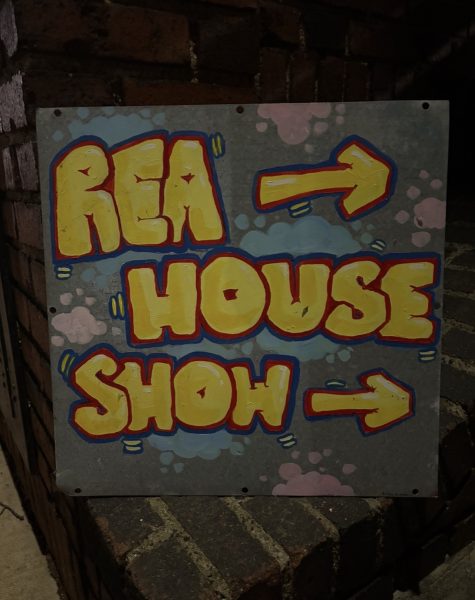
Many schools have similar opportunities to get involved with music. Another example is at Chatham University, through a group called the Coffeehouse Committee. This group puts together shows with local college bands in a DIY venue in a dorm basement.
And even if your school does not have many paths for this field, it is all about what you make of it.
“I got started in college, even though we don’t have a music business major here [UMD] by using the resources that are available to me,” Marsch said. “And really, [I’m] just like going the extra mile to find resources that are available to make the most out of those resources.”
Regardless of what your school specifically offers, it will definitely help you build a portfolio for possible entree into the music industry.
Remember that college education is not a necessity, but networking is
When it comes to this field of work, a formal secondary education may not be the right fit for everyone.
The biggest part of being successful in music is being able to reach out and build meaningful connections with other professionals.
Beane, a singer who attended Berklee College of Music in Boston, MA, shared a little about his experience in the industry.
“I’m honestly still in a lot of debt,” Beane said. “So, I think moving to a city that is like a hub of music, like New York or LA, and putting yourself into the industry can honestly be just as beneficial.”
Volunteer as much as you can
Whether you are a student or not, a great way to start getting involved with live shows with little experience is volunteering with various organizations that partner with artists and venues.
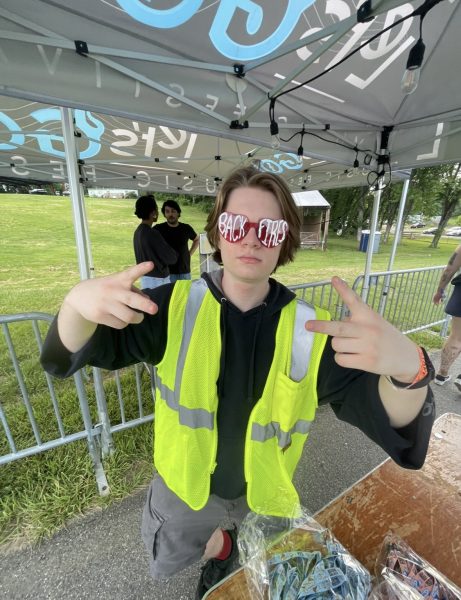
Headcount is a popular partner of many artists, including Sabrina Carpenter and Harry Styles, as well as festivals like “All Things Go.” This non-profit has volunteers register voters at live shows. Volunteering with this organization not only gives you the opportunity to see a show you may not have gone to on your own but also to build many wonderful connections within the music scene.
However, if you are looking for more music-related volunteer opportunities, make sure to keep an eye on local operations.
For example, in Maryland, Let’s Go Music Festival searches for volunteers every year to help with admission into the fairgrounds. They are currently looking for volunteers, according to their Facebook.
And even if they are not major venues or artists, it never hurts to gain some experience at local bars or performing arts centers. When you are participating with these organizations, it is totally worth it to go above and beyond. People will remember the effort you put in when you were not even getting paid.
Take every opportunity
The biggest factor of success in this industry is to take what you are given. Even if a volunteer opportunity is not what you necessarily want to specialize in it, any experience is beneficial
Evan Cohen, an artist manager, acknowledges this as integral to a music industry career.
“My biggest suggestion would be to get involved in as many things music related as possible,” Cohen said. “Try and work at a venue in town or work with artists or volunteer at festivals and get as much real experience as possible and meet as many people so when you get out you have an idea of what you like to do.”
Many music jobs look for versatility, so even if you want to work in photography, per say, trying out lights or sound would be great to have under your belt.
Put yourself out there
In order to get these opportunities, you cannot be afraid to put yourself out there and take a risk. No one ever got rewarded for being afraid to begin.

You have to reach out to venues, artists, festival organizers, etc. to be able to get a real foot into the door, no matter what your niche is.
It never hurts to try. I personally have reached out to countless artists and managers about photography opportunities, even knowing the answer would likely be a no.
You also have to learn that a “no” does not mean you did not succeed. You are still getting your name into the conversation and that is half the battle.
Marsch put an emphasis on the fact that “you’re going to be knocked down, like this is such a hard industry, and you have to have that tough layer of skin to be knocked down and still have the courage in yourself to want to get back up and like, and force yourself to get back up.”
And with this courage, you must also learn to not be afraid of being annoying. Artists and managers are busy, so following up will make sure they see your emails in their inbox
Join organizations for youth in music
When you get more comfortable with all these components of work, there are many organizations for youth actively pursuing music business.
Grammy U, the Recording Academy’s official membership program for young adults in the music industry, is one of the most notable to join.
“They [Grammy U] provide industry contacts, like different networking mixer opportunities and different experiences, whether you’re like an artist or a rising professional,” Marsch, who is also a Grammy U ambassador said.
The organization has a lot of unique opportunities for members, including access to soundchecks, an annual conference (this year was in New York City) and mentorship programs. Grammy U is open to anyone ages 18 to 24, with both student and non-student applications.
Alicia Keys’ foundation, She Is The Music, is another group that provides incredible opportunities for women in music. There are mentorship opportunities, scholarships, workshops, and many more experiences for those involved.
Make sure to search for organizations close to one’s own residence as well to get the full experience.
Build up your portfolio
With all of the actions above, you are building up a portfolio with all the experience you have gained. The most important part of all of these, however, is to make sure you are documenting all the opportunities you take part in. Add them to your resume and/or your portfolio to make sure employers know your skills.
Be kind and considerate
However, no matter how many of the tips you follow above, the most important quality to have is to be kind.
You want to make friends in the industry, as success is mutual for both parties.
“The industry is all about leveraging relationships,” Marsch said. “You want to have good relationships with people. If you can’t network and be kind, you’re not going to make it in the industry.”
No one wants to work with someone who is mean. So, be considerate of the other professionals around you, as well as fans of the artists as well. Let your passion for music guide you through the waves of the industry.
“At the end of the day, it’s all about passion and just making yourself known and heard and seen,” Marsch said.