
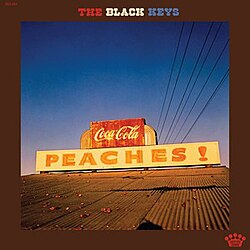
On May 1, “Peaches!” by The Black Keys went public. The album features 10 tracks, reaching a runtime of 44 minutes. It is a cover album, with most of the songs being blues songs, from the ‘60s to the ‘90s.
The Black Keys have always had a somewhat inconsistent genre, with a tentative label of “blues rock.” This album falls into that category, but leans toward the rock side of things, with the instrumental’s heavy use of the electric guitar and drums.
The opening track is titled “Where There’s Smoke, There’s Fire,” and it is a fantastic opening. The original version of the song was released in 1984 by Willie Griffin, and it has been covered a number of times before The Black Keys’ rendition.
It is a love song that utilizes a simple metaphor, describing love as fire. It is also an extremely catchy song, and it is one I find stuck in my head often after listening to the album. Although, I cannot complain as it is one of my favorites.
The next track is titled “Stop Arguing Over Me,” which details an experience in which the singer is asking his partner to stop picking fights over him because it is exhausting. This song was originally released by Big Lucky, whose real name was Levester Carter, in 1969.
This track is very repetitive, with the verses being quite short and the line “You better stop arguing” being repeated over and over again. It also features multiple instrumental breaks, like many of the other tracks on the album.
“Who’s Been Foolin’ You” is the third track and continues to align genre-wise and instrumentally with the previous songs featured above. Many of the phrases used in this song are very traditional to the blues as a genre, and it really helps ground the listener to the era of the original song.
Within this song, a man speaks to a woman who did wrong and was possibly unfaithful to him, though the lyrics are somewhat unclear. The original writer of this song was Arthur ‘Big Boy’ Crudup, and its original release was in 1945.
The fourth track of the lineup is unfortunately my least favorite, though I do still enjoy it. It is titled “It’s A Dream”–which I think is a very unoriginal name, but that’s just me–and was originally released in 1972 by Little Ed & The Soundmasters.
I personally find this song to be uninteresting to listen to, as it presents the cliche of yearning for a potential lover. This album features multiple choruses that tend to repeat themselves, but it just does not work in this case, since the main line and musical motif are not very interesting to listen to.
The fifth track, “Tomorrow Night,” is not a very huge step up from the previous one. The main part of what infuriated me while listening to this song is how unintelligible the lyrics are, I absolutely could not understand a word. That being said, it is a relatively catchy tune, and the instrumental is interesting enough to listen to.
What I do really enjoy about this song, however, is its subject matter. It is not groundbreaking by any means, but it is very optimistic, and I appreciate that in music. However, that aspect of the work was created by Junior Kimbrough and The Soul Blues Boys when they released the song originally in 1982.
On a far more positive note, the sixth track “You Got To Lose” is by far my favorite. The instrumental is addicting, and Dan Auerbach does a fantastic job with the vocals for this song. Unfortunately, this is the shortest track of the album, being only 3:17 long.
Similar to the previous track, I love the optimism within this song. The message is very uplifting. It talks about how it is ok to make mistakes, and I have to applaud Earl Hooker for creating and releasing the original in 1969.
“Tell Me You Love Me” is the seventh track and is pretty average, all things considered. Its first release was in 1990 by Jessie Mae Hemphill and originally titled “Jessie’s Love Song.” It is a very simplistic love song.
For that reason, it ends up with a similar problem to “It’s A Dream,” with the main lyrical motif being a little monotonous, but I find that this is not nearly as bad of an offense because it is far more catchy.
I really enjoyed the eighth track of this album, “She Does It Right.” The vocals are great here, and the instrumental interludes in this song are my favorite out of any of the tracks. I am a sucker for the electric guitar, and it is utilized well.
Dr. Feelgood released the original version of this track in 1975, and it is the only song from this cover album that I had listened to before hearing the Black Keys’ rendition. It is another love song, but it seems a lot less generic than the previous ones.
The ninth track, “Fireman Ring the Bell” was an extremely close contender for my top song, barely beat out by the sixth track. I love this song lyrically more than any of the other tracks; it is about a man who gets sent to prison without being able to say goodbye to his lover, and he then spends his time in jail thinking about her, saying.
Unlike the lyrics of the other songs, I find myself singing the verses here because they are just as catchy as the chorus. R.L. Burnside did a great job, and The Black Keys really did his original 1994 version justice.
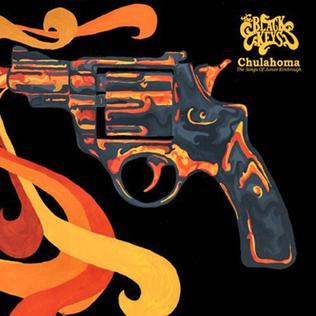
In 1999, Junior Kimbrough and The Soul Blues Boys wrote the original version of this album’s final track, “Nobody But You Baby.” Not only is this the only repeat artist on the album, but The Black Keys already covered this song on their 2006 album “Chulahoma”.
This song has the longest runtime of any other in the album by a landslide, coming out to a staggering 7:13. It is, yet again, a simple song about love and is lyrically very similar to “Tell Me You Love Me.” It is a very solid track and a good end to a great album.
This is not a perfect album by any means, but I had a great time listening to it and I believe that anyone who enjoys older music or rock music in general would enjoy it. The instrumental is a personal highlight, it feels very reminiscent of their older music and everything compliments each other so nicely.
I truly recommend this album, and if I had to rate it, I would give it a 7/10.