
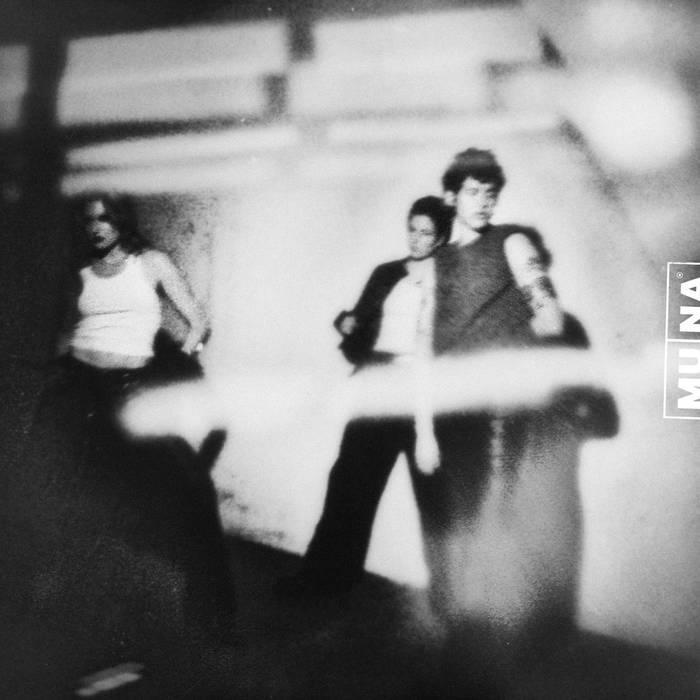
Four years feels like the end of the world when waiting for your favorite artist to release new music, but “I would wait forever as long as I’m waiting for” a new MUNA project.
“The greatest band in the world” is officially back and ready to save the world with their fourth studio album, “Dancing On The Wall.”
MUNA is an indie-pop band based in Los Angeles (LA), California. The three-piece is composed of Katie Gavin, Josette Maskin and Naomi McPherson, who met at the University of Southern California.
The band has not released a new album since 2022, excluding Gavin’s solo album released in 2024. After a long wait from many dedicated fans, MUNA is finally back to capture the queer experience in their 39-minute record.
It Gets So Hot
Opening up the album, “It Gets So Hot” sets the scene for the rest of the tracks. That scene is the club, with sweat dripping down your body.
The beat created by synthesizer is very reminiscent of 80s-style Madonna tracks and the cloudy atmosphere of the music matches the humid vibe of the lyrics.
As the heat of the song fades and the crescendo begins, the synth speeds up and the voices distort as they fade into the background, much like one’s thoughts and words as they fall into the haze.
Dancing On The Wall
The lead single and title track on the album, “Dancing on the Wall” is nothing short of definitive for MUNA as a band.
“It felt like the most MUNA song that we’ve ever actually made,” Maskin told Billboard. McPherson added that “emotional, yearning synth pop is where we [MUNA] shine.”
This song brings a new, dancier chapter of the band, yet still reminds listeners of the upbeat tracks of their sophomore album “Saves the World,” like “Number One Fan.”
Gavin sings in the bridge, “Now I’m working up a sweat/Spinnin’ in my party dress/Stroke of midnight at the ball,” describing the exact feeling the music invokes.
Eastside Girls
This song might just be “the only real reason I move to the Eastside,” as Phoebe Bridgers sang in “Punisher.”
The beat in the intro sounds almost like “Around U” with a fast BPM. Despite being faster, the song coddles you as you dance around, dreamily. The outro of the song parallels Billy Joel’s “We Didn’t Start the Fire,” which Genius user Liz Gilmartin added “Except it’s super hot and gay.”
Gavin romanticizes the Eastside and the people’s authenticity, despite it not being the dream destination of LA, singing that “you know it’s better with the Eastside girl.”
At the end of the track, Gavin cleverly adds that she is an Eastside girl, enhancing the confidence that embellishes the song in claiming a role of queer identity.
Wannabeher
There are two different sides to the coin that is “Wannabeher,” yet both boosted it to fan favorite status upon release as the third single.
MUNA’s “version of Bikini Kill’s ‘Rebel Girl,’” according to the band for DIY Magazine. The three piece taps into the 90s punk-rock genre with a harsh beat and some words I cannot use on this site.
However, the lyrics are very tongue-in-cheek, unashamedly expressing sapphic lust.
As the song breaks into its more poppy chorus, the lyrics perfectly capture what the band refers to as “a gay canon event:” do I want to be her or be with her.
“Hopin’ that she’ll rub off on me when I kiss her” Gavin sang.
On Call
Speaking of queer experiences, what is more sapphic than longing for that emotionally unavailable girl who does not want you back?
“On Call” is as if Dido and Alanis Morissette had a baby, but with the added element of 80s synth that instantly puts it on repeat.
The song encapsulates the feeling of trying to move on, yet still holding out hope for that one lover. With an entrancing beat and smooth harmonization, “On Call” places you straight in the club, dancing to a slow jam with glitter all over to distract yourself from your desires.
The key change as Gavin sings the last verse not only does wonders for her vocals, but also for the theme she wanted to convey.
“When I was younger, I might’ve written a song just like ‘On Call,’ but the difference is that I actually would’ve been living it for much longer, and I would’ve put myself in much worse situations for much longer,” Gavin told Elle. “I’m writing the song about the feeling of it, but I’m not going to put myself in the middle of a situation that I know is going to cause me harm.”
As she sings in a higher key and the synth brightens up the mood, a listener can feel that it is merely figurative now.
So What
“The reviews that came in/The fangirls and the harshest critics/Are all in agreement,” that MUNA has done it again with their second single of the album, “So What.”
The track experiments more with synth, distorting vocals and adding unique beats all around. The carefree style is very reminiscent of some earlier works of The 1975.
Despite the songs focus on “it’s alright, it all worked out” and “I won’t even notice if you don’t (If you don’t love me),” the atmosphere places you lonely in bed after your friends went home from the party.
Even with the attempts to let the glitter of life cover up the wounds, it all dwindles down to overcompensation. It is similar to Maisie Peters singing “Nobody actually happy and healthy has ever felt so desperate to prove it,” on “Watch.”
But, so what? At least a listener can dance along to the facade.
Party’s Over
“Party’s Over,” with a title fitting to follow the last track, is one of two interludes, designed to allow the listener to truly listen.
“This record is super propulsive. We want you to be able to digest everything,” Maskin told Billboard. “You need a moment to take it in, like what has occurred and what is about to occur. We use any interlude to give the listener a break from the information.”
The listener might not think it is necessary, but the next track, “Big Stick,” is far more propulsive with a clear mind.
Big Stick
MUNA has a “Big Stick” when it comes to their music and they are not afraid to pull it out. The most politically charged track the band has ever released, this song tackles the idea of our desires being influenced by others.
“Big Stick” still utilizes synth and addicting dance beats, but Gavin’s pissed-off tone takes the forefront of the track. From grasping how trends are influenced by those more popular and in power to the corrupt government the United States is under, the track makes you want to cry out of frustration.
On March 31, the song was initially released only on BandCamp, where the description said, “it felt right to use this moment and track as an opportunity to raise funds for an organization that means a lot to us, Pal Humanity. Pal Humanity is a comprehensive mutual aid organization providing communities in the north and south of Gaza with essential supplies, medical care, and a school for grades K-12.”
With this, MUNA was not afraid to call out the depravities being instilled.
“We give weapons to dictators in apartheid states/We give kids in Palestine PTSD/But we’ll never f***in’’ ever give them something to eat,” Gavin sang.
Our leaders “can make you do anything that [they] want you to,” but hopefully this track can encourage listeners to do something better.
Mary Jane
Taking a big leap from the anger on “Big Stick,” “Mary Jane” takes a turn back to the dream-synth pop that many expect from the band.
Blending the 80s style they have come to love on this record with the modern, crunchy-indie style has made this song a fan favorite. Though not lyrically the star of the show, “Mary Jane” makes a fresh feeling out of a tale as old as time.
Being with someone but knowing they just want someone else, no matter how hard they deny it. Drawing back to the previous interlude, “Now you can swear the party’s over/But that don’t make you sober,” Gavin sang.
With what DIY Magazine describes as a “chiming stoner-lament,” this is the track to get excited to hear on tour.
Girl’s Girl
“Girl’s Girl” is the lesbian dream: “The L Word” in the form of the song. Opening with the web of all the relationships overlapping in the queer dating scene, the band adds an addicting beat that makes it feel as though you are getting the inside scoop at a party.
Gavin cleverly uses the term girl’s girl, which usually means a woman who supports women, but in this use, she gets her fair share of action with other girls.
The laughing vocals in the back from Maskin and McPherson add to the interest of the music, but also make the listener laugh along to the idea of the girl sleeping with everyone except Gavin.
After the bridge, the laughing fades as Gavin gets more dejected about her rejection. The gloominess does not last long, though, quickly building back up with a reverb.
“Girl’s Girl” is perfect for the girls who want to laugh and dance off their relationship struggles.
…Unless
In the second interlude of the album, the listener questions if the party is actually over this time. With a slight burst of the music at the end, we are ready to party again.
Why Do I Get A Good Feeling
“Why Do I Get A Good Feeling,” you may wonder. Well, it could only be due to one of the most intriguing tracks of MUNA’s new album.
The drum and bass of this track pick up quickly, almost stressing a listener out before they fall into the beat.
In true Indigo Girls fashion–one of their biggest inspirations on this record–they tap into the intimate songwriting style, but make it shiny and shimmering like an Imogen Heap track.
The personification of emotions into physical actions adds to the visual interest of the glittery atmosphere created.
“Folded in a coat/Tucked into the armchair/Must’ve misplaced my common sense” Gavin sang.
With a decadent violin solo for the instrumental outro, a listener drives home from the club with ringing ears, waiting for another good feeling to come, but it never does.
Buzzkiller
Well, if you are going to be a “Buzzkiller,” what better place for the tail end of the album.
“Buzzkiller” showcases MUNA’s number one strength: honesty and vulnerability. When I press play on a MUNA project, I never have to question if it will be authentic. One of my favorite things about this band is they know when not to glitz and glam the lyrics and just let the listener feel it.
With a constant pulsing synth in the background that never fades, the song encapsulates exactly what it feels like to have anxiety. The fear never fades and you try to hide it until you “let the mask slip and stare at the ceiling.”
Lyrically, “Buzzkiller” takes the cake for the strongest. Having everything you want and still being sad. The feeling always comes back.
The album closes with a reverb distorting Gavin’s feelings before ending the journey listeners took on this record. Passion, love, lust, anger, yearning and every feeling in between, but it all ends with three whispered words from Gavin:
“I love you.”