

Picture a Thursday night in May 1999. You grab some popcorn, sit down on the couch and turn on the TV to watch the latest episode of your favorite show, “Friends.”
Somehow, they have already made it to season 5, episode 24. You cannot wait until September to find out what will happen with Ross and Rachel in season 6.
Snap out of it. It is not 1999 anymore. Your current favorite show only released two seasons, eight episodes each, before getting cancelled. And the worst part is, these seasons aired two years apart.
It is no secret that these changes have been an ongoing trend in the world of television, but what has caused the trend?
The most obvious answer to the question is the introduction of streaming services, such as Netflix, Hulu and Disney+. According to Digital Agency Network, as of 2023, 85% of American households are subscribed to at least one streaming service.
With these services, people are now able to watch any show, any time, with just the click of a button. This led to a rise in binge-watching. Beginning to grow in popularity in 2013, people now have the ability to watch a show in its entirety in a short period of time, instead of over the span of the months the show .
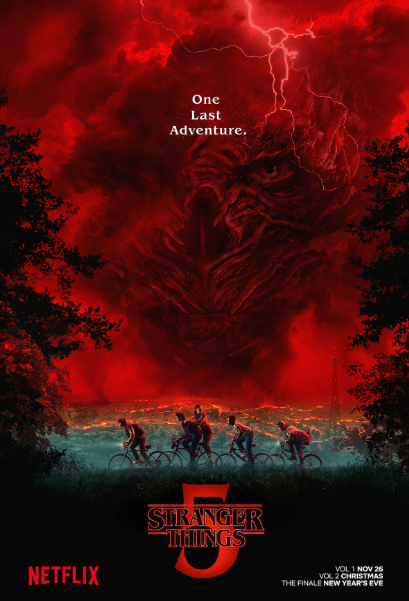
The epidemic of binge-watching has allowed for showrunners to focus on quality over quantity. One of the most prevalent shows that falls victim to this is “Stranger Things.”
The Duffer brothers, the showrunners of the hit show, recently told The Sunday Times that a single shot–which ended up being cut altogether–cost around $40,000. One shot costs as much as some people’s annual college tuition.
According to IMDB, the reported budget for season 5 racked up to $400-480 million. This is four times the average cost of a feature film.
Many tend to attribute shorter seasons to the cost, since production companies can spend more per episode yet less per season. The fault in this explanation is that many people are consuming shows with such inflated budgets.
Is the exorbitant budget really worth it if viewers are just going to finish the season in a day and forget about it in a few weeks?
Now, pair the inflated production costs with an over three year wait between seasons. Shows like “Stranger Things” have managed to see massive success through this pairing, despite all signs pointing towards a crash and burn.
“Stranger Things has been a pop culture phenomenon … which has lived through 4 presidencies now, and nearly a decade of time with the result of only 5 seasons to show for it,” University Echo staff writer Mckenna White said. “Why did it take so long for us to get here, and will ‘Stranger Things’ land solidly enough to make the wait worth it?”
Many other shows have had a negative response to similar circumstances. “Fargo” saw a significant drop in viewership due to longer breaks between seasons, and “The Bear” received criticism for an underwhelming season after a year’s wait.
At least when cable TV seasons were lackluster, viewers could count on a second chance in a few months. Since these seasons were long, sometimes these underwhelming episodes had a charm to them.
Seasonal filler episodes, such as for Christmas or Halloween, would air as the holidays neared. Now, there are no strategically planned specials based on air date and definitely no room for filler with these plot-dense seasons.
No more looking forward to a “Slapsgiving” in “How I Met Your Mother” or a “Halloween Heist” in “Brooklyn Nine-Nine” every year. It seems as though showrunners, writers and production companies alike do not want to have fun on screen anymore.
“Adults” may break this cycle. The sitcom aired earlier this year and contains eight episodes full of laugh-out-loud nonsense and Gen Z humor. Eight episodes for a sitcom, that’s it.
“The season is too short! Eight episodes just aren’t enough for me,” purewow Beauty Editor Chelsea Candelario said. “Let’s bring back comedies with 20-22 episodes per season—especially when they left me with a promising (and probably very slow burn) relationship a-brewing.”
The sitcom’s potential of becoming a Gen Z classic, like “Friends” or “The Big Bang Theory” for generations before, is inhibited by the very structure television has turned to. But hey, at least you can rapidly consume any show you get your hands on.
This rapid consumption has also led to an unprecedented number of one season shows and an increase in cancellations.
“We had masses and masses of new television, it was just being pumped out by all these new streamers trying to compete with each other,” Associate Professor in Film and Television at the University of Reading Dr. Faye Woods told The Standard.
Streaming services allocated money to tens of thousands of new shows in hopes of finding one that stuck with the audience. When they did, other loved shows suffered the consequence.
This, sadly, disproportionately affects shows centered around queer characters, particularly queer women. Shows like “I Am Not Okay With This,” “First Kill” and “Everything Sucks” will never see a second season, despite positive reception from the public.
Despite all the complaints and praises these creators receive regarding these shows, it seems that their viewers’ opinions mean nothing other than a number in the view count, which turns into another dollar in their pocket.
There are a few shows, such as “Abbott Elementary,” that keep the lost art of the traditional TV structure but for the most part, the trend in these shows is unrelenting.
So, for now, I will have to stick to HBO Max to get my fill of the traditional sitcom through the killers themselves: streaming services and binge-watching. At least there is no wait to find out just what is happening with Ross and Rachel.