
Art is one of the most versatile things in the world. From music to dance, painting to writing, art allows for people to express themselves in ways that no other species can.
According to the Merriam-Webster Dictionary, art is the conscious use of imagination and skill. The urge to create is exhibited by generations of people, and now it seems, computers.
Art was the original written story. The first documentations of literature, known as the Sumerian cuneiform, emerged about 5000 years ago, whereas the first recorded depictions of art date back to approximately 64,000 years ago in modern-day Spain. These red-ochre symbols found in caves were likely made by Neanderthals and did not depict figures but instead various markings. Later, around 45,000 years ago in Indonesia, what is believed to be the first figurative paintings emerged.
Humans have progressed a long way since random markings on walls. In The Middle Ages, art progressed to a form of activism, telling the stories of human strife. During the Renaissance, philosophy and art began to merge, while generationally known artists were actively creating, such as Leonardo Da Vinci and Michelangelo.
Between the 1950s and 60s, pop art became a way for artists to reject the norm and embrace the unknown. Now, art is seemingly on its way out of human hands and into a code of ones and zeros.
Artificial Intelligence (AI) entered the everyday lives of individuals in the 2010s, with the introduction of conversational AIs, such as Siri in February of 2010. This type of AI is a part of a broader group known as Narrow Artificial Intelligence, (also known as Narrow AI,) or in other words, artificial intelligence that only has the ability to perform a specific task. It is the only form of AI that currently exists.
The type of AI people typically think of when they picture artificial intelligence is Artificial General Intelligence (AGI). This type of AI – such as Skynet in the “Terminator” series or Ultron in “Avengers: Age of Ultron” – can learn from whatever is put on the internet, perform any task and make decisions for itself. In these films, this type of AI is ultimately seen taking over humanity and any limits initially placed upon it by human programmers.
As of 2025, this technology does not exist and remains theoretical, along with Artificial Super Intelligence (ASI). ASI is a form of AI that surpasses all human intellect.
Despite the prospect of androids conquering humans being far from the present reality, Narrow AI still holds its own potential threats to humanity, mainly by making creativity obsolete and the potential misuses of the technology, such as recreating a person’s voice without permission.
While science has yet to reach the point where computers can create things of their own free will, it has reached the point where it can create what is typically labeled as art: songs, images and as of this summer, acting.
“Actress” Tilly Norwood is an AI creation of the Artificial Development department, Xiocia, at English company Particle6. The computer-generated actress had its film debut in July, with a completely AI-generated short film titled “AI Commissioner” released on Youtube. The supposed comedy was written by ChatGPT and featured Norwood, along with 16 other artificial actors.
The film was faced with more negative comments than positive. Comments on the video framed from jokes such as “we were harmed in the watching of this video,” by @alexnobrasil3062 to more constructive criticism such as, “hearing them [the AI actors] talk was so confusing. Like they’re saying words but not actually saying anything at all,” from @cheese8046.
Some commenters, such as @lorelay-3006, took the poorly reviewed film as a good thing, stating, “if that’s what AI considers ‘comedy,’ we’re still safe for a bit of a while.”
The comments stem from the belief that Artificial Intelligence may have the ability to overtake humans someday, primarily in the workforce, and the entertainment industry is at the forefront of becoming obsolete. Studies have already shown that jobs in the movie industry have a higher chance of becoming obsolete due to the use of AI. The creation of an all AI film may be the genesis.
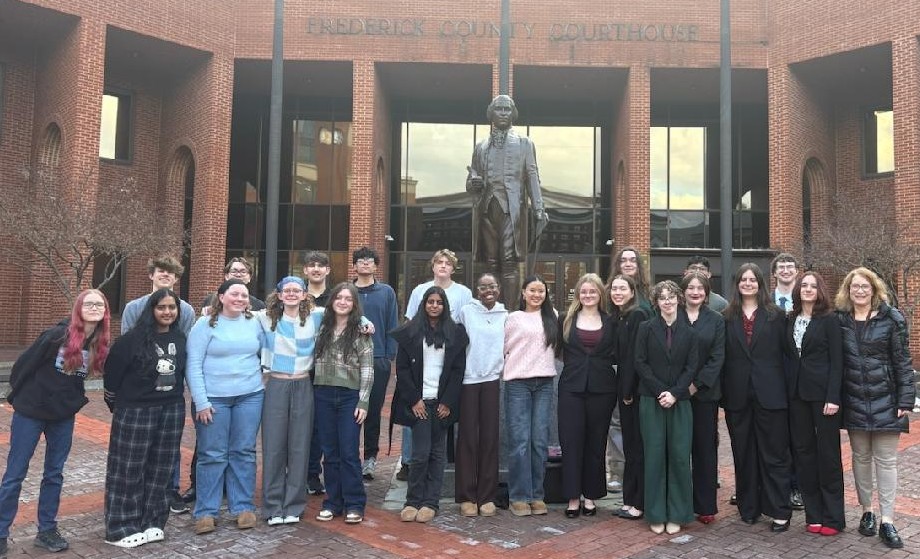
“I worry that AI, in the future, will look super realistic and may take away jobs,” said president of the Linganore High School (LHS) chapter of the International Thespian Society, Levi Spelman.
However, some individuals were not overly worried about the all AI film itself. Sure, it is evidence that computers could potentially take over the film industry, but the leaders of the industry still prefer real people, right? Well, not exactly.
During a panel at the Zurich Film Festival, Particle6 founder and CEO Eline Van Der Velden announced talent agencies were interested in taking Norwood on as a potential client. This announcement was faced with outrage from both everyday people and the superstars of acting.
According to actress Emily Blunt, who has performed in several films such as “The Devil Wears Prada” and “Oppenheimer,” AI is something to be feared, not revered.
“That [Norwood] is really, really scary,” said Blunt during a podcast with Variety. “Please stop taking away our human connection.”
In response to the public outcry, Der Woodsen released statements on her own, Norwood’s and the company’s Instagram accounts.
“She [Norwood] is not a replacement for a human being, but a creative work – a piece of art,” Der Woodsen said in the statement. “Like many forms of art before her, she sparks conversation, and that in itself shows the power of creativity.”
Others disagree with the sentiment, believing that AI cannot compare to true human beings.
“I honestly think it’s not a smart move for Hollywood,” said Luka Van Hersken, an LHS alum and actor who has had a variety of roles, including the popular show Law & Order: Special Victims Unit. “You can’t generate human emotions, no matter how many prompts you give an AI chat box or generator.”
However, AI actors are not the only way that artificial technology is being used in the film making process. Even major shows, such as Disney’s The Mandalorian, used AI instead of human creativity.
In the final episode of season two of the hit series, a young Luke Skywalker takes to the screen in all his jedi glory. However, actor Mark Hamil, the original Luke Skywalker, was 68 when filming took place. Meanwhile, Skywalker was in his twenties.
In order to accurately portray Hamil as a younger version of Skywalker, a lot of technology went into de-aging the actor. Most notably, the production team used Respeecher AI-powered speech synthesis to make his voice sound about 40 years younger, instead of hiring a voice actor like used in other famous roles, such as Colin Hanks voicing young Woody in Toy Story 4.
Jon Favreau, the creator of The Mandalorian, voiced his own concerns about the potential misuse of this AI technology.
“I think the case of Deepfake… it’s something that is available readily, it is a reminder that it might be used for purposes that are more misleading and more detrimental,” said Favreau in the Disney Gallery behind-the-scenes series on Disney Plus.
In the already competitive industry that is voice acting, AI is seemingly an uptrend, while real human voices are taking a backseat. According to the Australian Association of Voice Actors (AAVA), AI is estimated to put 5000 of their local voice actors’ jobs in danger.
On top of this, the AI is learning from these actors and replicating their voices, and actors are seeing little to no compensation.
According to VICE, a Canadian-American magazine, voice actors are no longer seeing contracts to voice in films. Instead, these actors are being asked to sign away the rights to their voices, so that AI can later be used to generate synthetic versions.
Despite leading figures in the AI industry’s efforts to further push these computers into film makers’ everyday lives, the industry is not going down without a fight.
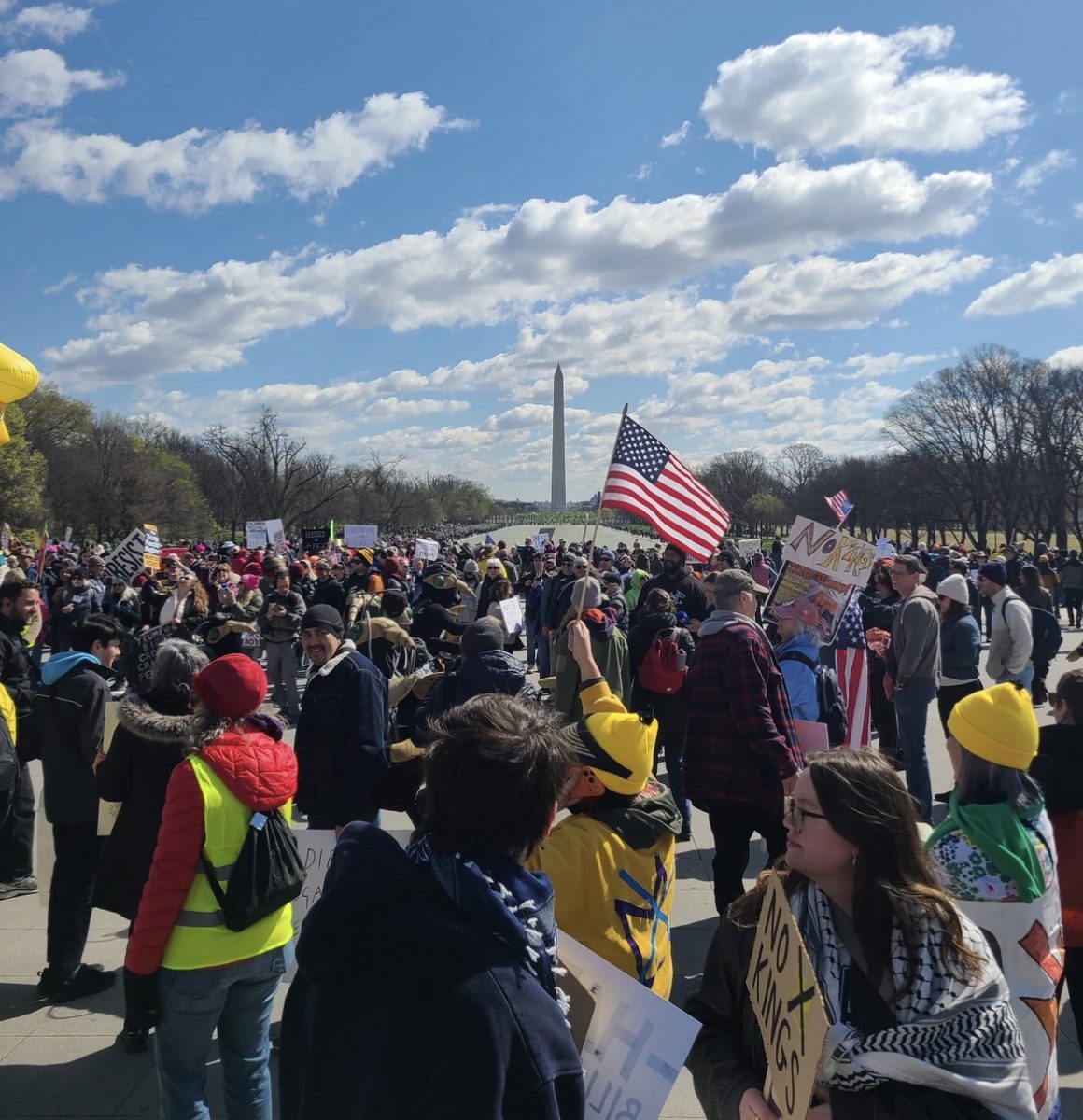
Protests for protections against artificial intelligence in the movie industry have been happening since the 2023 SAG-AFTRA strike. Leading voices in the media, such as Emmy and Tony winner Bryan Cranston, have actively spoken out against the use of AI and its immortality. Even younger, less known actors willingly speak out on the topic, hoping that their combined voices will be heard.
“AI in replacement of actors is bad. Full stop,” said Van Herksen. “Make stories on your own, don’t rely on a generator for your stories when you can probably craft one yourself.”
Either way, one thing is clear: AI is not ready to take over just yet. Artificial intelligence cannot exist without people behind it teaching it, and so far, the computers are still in the elementary school stage. While companies are beginning to incorporate it into media more and more, there’s still a lot of work to be done before full fledged AI only, Oscar-winning movies show up on the big screen.