
Overcrowding in animal shelters has been a significant issue for many years. Even with the widespread awareness of spay and neuter clinics, over breeding and the lack of neutering and spaying are large factors that often play into this.
With this in mind, how do shelters and rescues handle larger populations today? Do they even still face issues with overcrowding?
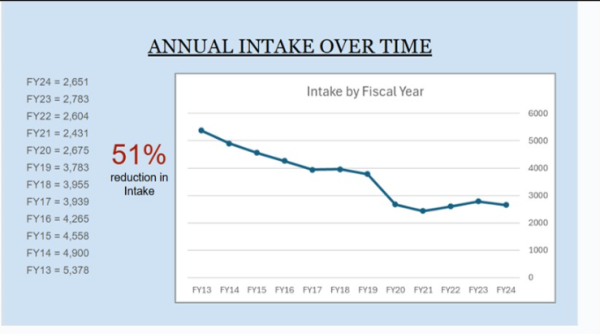
Due to newer pushes for neutering and spaying, including services provided by free clinics and less expensive payments, the population of stray dogs and unwanted puppies in shelters has actually declined in recent years.
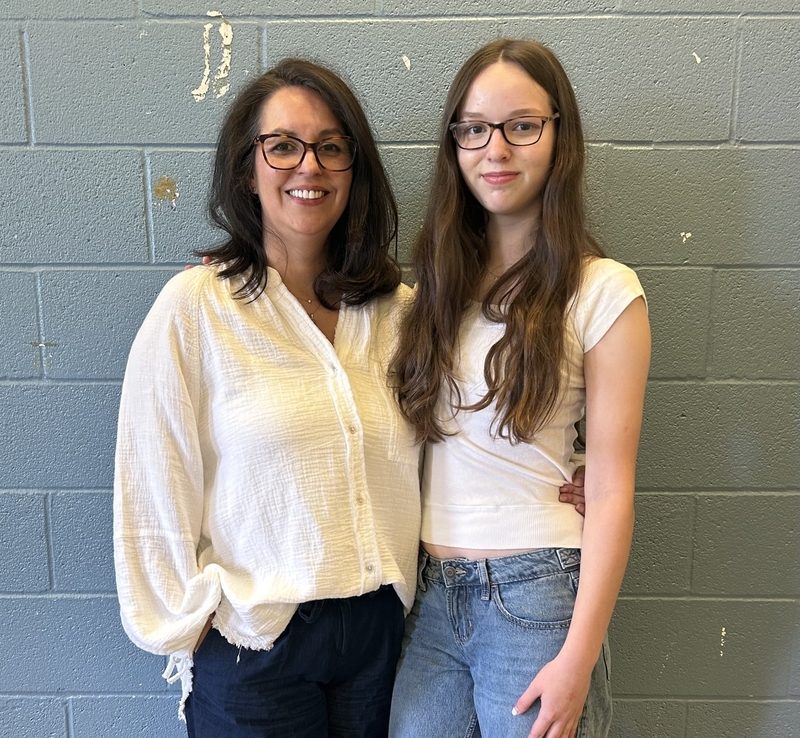
Used with permission (Photo by – Bethany Davidson)
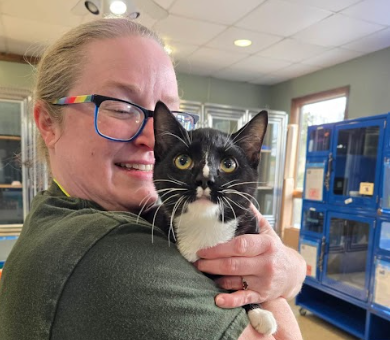
Bethany Davidson, the Humane Educator at Frederick County Animal Control, shared the biggest factor that has led to the decline of overpopulated rescues and shelters.
Davidson said, “But most importantly, is the rise of awareness and the availability of spay/neuter clinics that is contributing to declining populations. When animals are being altered (spayed or neutered), they are not creating more.”
Other factors like fostering have also had a large impact on the decrease of overcrowding in animal shelters
Fostering is the practice of temporarily taking a pet into your home to free up space at the shelter or rescue. Fostering can also be used to help dogs overcome fears of people or just help them get used to living in a household rather than a kennel.
Some fosters even eventually take in the pet as one of their own, also known as a “failed foster”. This ultimately still helps meet the goal of finding these pets forever homes.
Robin Emshoff, Mount Airy resident and an avid foster parent for the Canine Humane Network, said, “A lot of dogs have really come out of their shell while staying with me, so I do feel that it helps a great deal with acclimating them to regular home life.”
In past years, has been used as a tool to create more space in shelters; however, that is not typically the case any more. While this still occurs in many places, shelters like the Frederick County Animal Control and the Humane Society of Carroll County run under the standards of no kill shelters.
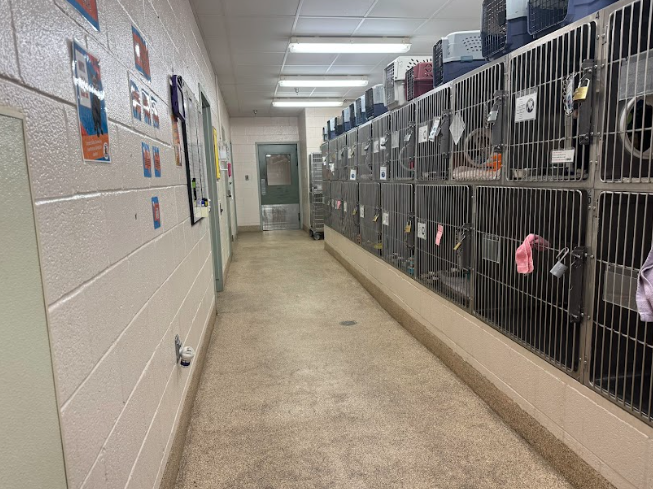
A no kill shelter means that the organization will take in as many animals as needed. They will add more crates or separate stalls to create more room as necessary, and they will not euthanize a dog due to its breed, gender, color or a lack of space in the facility.
Euthanization may still be used if a dog has a serious behavioral issues (mostly aggression) or serious medical conditions, which are actively causing them harm.
Some shelters like the Humane Society of Carroll County also offer euthanisia services to the public for animals who are at the end of their life. They do this in order to provide a less expensive way to allow a pet to peacefully pass, as it typically costs around $200- $300 hundred dollars to euthanize a dog at a clinic.
Jamie Limoges, the Executive Director of the Humane Society of Carroll County, agreed with this stating“They [veterinary clinics] get calls all the time from people whose pets are at the end of their life, but can’t afford to have that service done.”
The type of agency a shelter or rescue is also plays a factor in how many animals they can take in at a time.
Davidson explained what her facility does when dealing with a higher population of animals needing shelter and care.
“Because of the type of agency we are, we cannot turn people away,” Davidson said. “If we need to set up crates somewhere, we’re going to set up crates somewhere.”.
Other factors that play into the number of animals in a shelter at any given time is the time of year and a person’s housing situation.
“During the summer our adoption rate tends to go up, because people are usually bored at home and want a pet,” Davidson said. “Also, if a person moves to a new house with a pet, the house might not be pet friendly, and they have to surrender their pet.”
Since Covid, there has been a significant decrease of shelters being over populated due to people being home and either wanting a new dog or being home and available to foster.
“I know that since the pandemic and being home so often, I have had more availability to be able to foster more dogs,” Emshoff said.
Just remember, there are always animals in shelters needing a home; so, for anyone looking for a pet, try to adopt one instead of buying from breeders. It is often a cheaper and more humane alternative.
Limoges later stated “I mean our adoption fees tend to be much less than the average breeder, I would say they are around $100 – $250 for dogs and around $25 – $75 for cats. Which definitely attracts people when looking for a new pet.”
Comparing this to common breeder prices of $700 – $1,000 adopting from a shelter would save money and provide safe homes for pets in need.