

On October 9, 1903, a reputable newspaper The New York Times (NYT) published an article titled “Flying Machines Which Do Not Fly.” The article, incorrectly, predicted that it would take at least one million years for humanity to develop an operational flying machine of any kind. Nine weeks after the article was written, the Wright Brothers successfully achieved powered flight over a field in Kitty Hawk, North Carolina. Human flight in an airplane took an incredibly smaller amount of time to achieve than predicted by one of America’s most respected newspapers, shocking the entire nation.
Fast forward 123 years, there are now thousands and thousands of airplanes that fly every day, lifting off the asphalt in one city and touching down in another in a matter of hours, each carrying hundreds of people or hundreds of crates of cargo.
Air travel was the last major innovation in earth-based transportation technologies, and for years, it was thought that rocketing between cities in cylinders tens of thousands of feet above the ground would be the most high-tech form of transport that humanity would ever see.
That was true, until the advent of space travel. On October 4, 1957, the Soviet Union launched Sputnik I, the first satellite and first manmade object in space, thus beginning the multi-national battle of egos that was the Space Race. The USSR and USA, for lack of a better explanation, raced to see who could get the first human in space. The USSR ultimately won when cosmonaut Yuri Gagarin orbited the earth in 1961. However, the objective soon shifted to becoming the first country to reach the moon. The USA won in 1969, thus ending the space race, since a further advancement in interplanetary travel seemed too ambitious at the time.
Throughout the next several decades, there were several developments in astronomical exploration. More trips to the moon, the construction of a multinationally manned space station and all sorts of different kinds of rockets were a few of the innovations that came to fruition in this time. The most novel of these came in the 2000s, when the first non-governmental space programs began to form, bringing humanity one step closer to the commercialization of space travel.
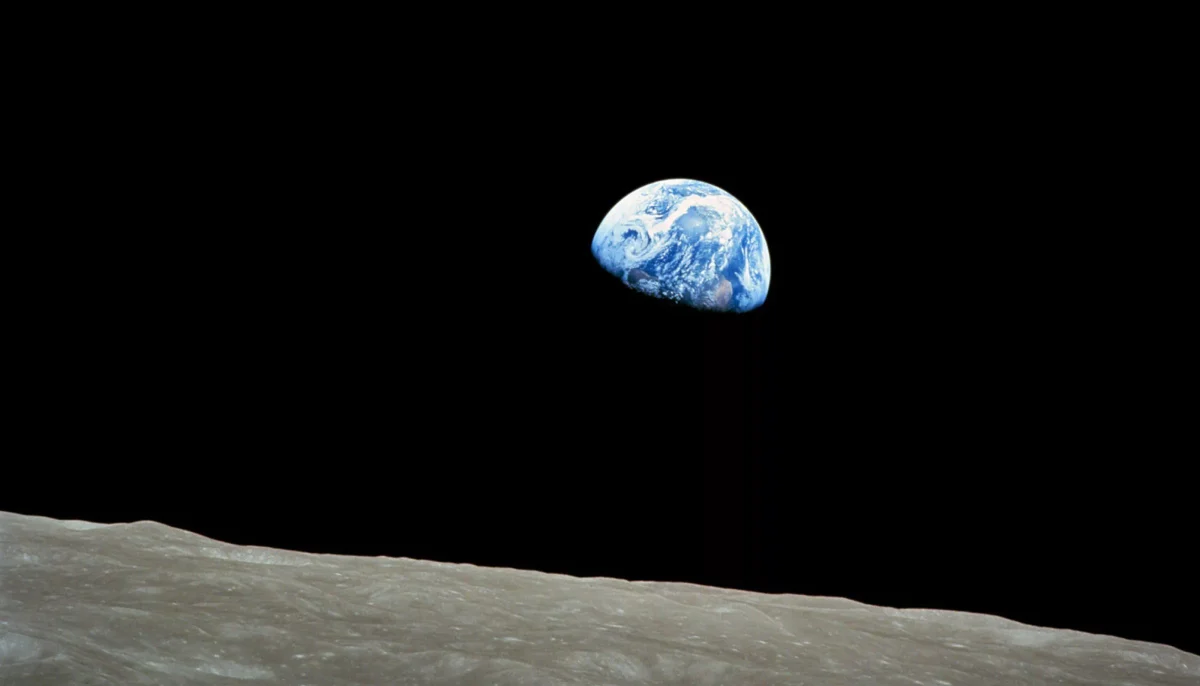
Fast forward to 2026, when the Artemis II rocket orbited the Earth’s moon, leading to an explosion in renewed interest in theconcept of space travel.
So, will humanity ever be able to travel to space on rocket ships as they presently travel from location to location on earth on airplanes?
Virgin Galactic, a subsidiary of Virgin Atlantic, a British passenger airline, was formed in 2004 in Tustin, California as the first commercial spaceline of its type. Although the airline did not,and currently does not, offer regularly scheduled flights to space, the end goal is to offer something like that in the near future. The spaceline does, rarely, take people to space, though these people are mainly wealthy with the means to finance a flight to space.
Those familiar with the history of commercial airlines know that originally flight on airplanes was reserved for only the richest members of the public. In the 1940s, four-engined propeller planes filled with well-dressed American aristocrats hopped from city to city across the country,as flight attendants served up caviar and the finest white wine.
But somewhere along the way, propellers turned into jet engines, caviar turned into tiny bags of pretzels, white wine turned into sprite and commercial aviation became way less glamorous than it once was. Without this shift, most people may never have experienced the joys of flight.
Society is in the early days of space travel as they were once in the early days of air travel. It is possible that in this world ordinary people may soon take commercial space flights as envisioned by numerous science fiction stories and films.
But, do people even want to take commercial spaceflights?
Bradley Dikeman, a high school senior at Linganore High School (LHS), claimed that he would love to take a flight to space.
“I kind of want [commercial space travel] to be a reality,” Dikeman said. “If I’m allowed to and able to go to space … I want to check out every planet at least once.”
Unfortunately, with the stormy conditions on planets like Jupiter and Uranus, travel to every planet in the solar system is near impossible.
That said, travel to nearby, habitable planets and moons like Mars and Earth’s moon is possible. Human beings have already been to the moon, and human travel to Mars is possible as well, with there even being talks about an establishment of a permanent settlement on the planet.
So, when exactly will we see commercial space travel? Well, spacenews.com estimates that commercial spaceflights may begin as early as 2027, with companies such as the aforementioned Virgin Galactic or Blue Origin, another commercial spaceline. A more conservative estimate puts commercial space travel becoming a thing in the 2030s-2040s.
A senate committee was created in March 2026 to advocate for the funding of Nasa for the purpose of advancing the strives toward commercial space travel. On March 4, they passed a landmark authorization act.
So, who knows? Maybe, in a few years time, you will be boarding a spaceflight to Mars with your grandkids.