

Since 1894, the first Monday of September has been celebrated as Labor Day. While this holiday is widely appreciated by students for granting them a respite from the stresses of the first few weeks of school, the true meaning of Labor Day is often lost on students.
Labor Day was born out of the Industrial Revolution of the 19th century. At this time, people were often working 12-14 hours a day, with no guaranteed time off, extremely low wages and dangerous working conditions. Children younger than 10 years old were also employed in mines, textile mills and factories and frequently died on the job. The creation of unions helped to draw attention to these issues.
“A lot of what we take for granted right now came out of the creation of unions,” Linganore High School (LHS) social studies teacher Darren Hornbeck said. “People fought and died for a weekend.”
Labor unions have existed in the United States since the 18th century, with the Federal Society of Journeymen Cordwainers forming in 1794. The first national labor federation, the National Labor Union, was formed in 1866, with the American Federation of Labor following in 1886. Both dissolved shortly after their institution, but many other national unions have taken their place.
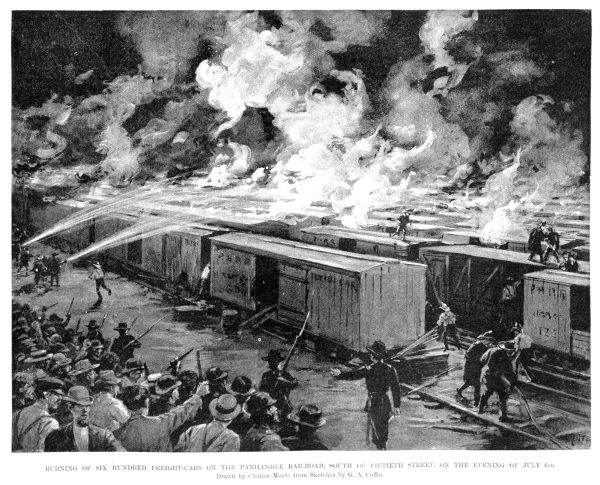
Throughout the late 18th and early 19th century, dozens of strikes were organized across the nations. One of the most famous strikes of this era was the Pullman Strike of 1894, a nationwide strike led by members of the American Railway Union against the Pullman Palace Car Company due to low wages and poor working conditions.
Due to such strikes, The Fair Labor Standards Act (FLSA) was enacted in 1938 and was the first wide-reaching law that implemented regulations and prevented companies from abusing their workers. It granted a 40-hour work week, a minimum wage and kept children out of the workplace and in school. However, there are still jobs that are exempt from some or all of FLSA, such as hospital workers and agricultural jobs.
Because such jobs are exempt from federal regulations, people might be put off from pursuing careers in these necessary fields. Minimum wage might also be a concern, especially among younger workers entering their first jobs.
“The wealth gap in the U.S. has gotten so much larger,” Hornbeck said. “People are working at the same level as they have been before, but they’re making so much less.”
Urbana High School senior Allie Kramer works a minimum wage job in food service.
“[Working at Tropical Smoothie], it’s not a terrible job,” said Kramer. “I understand if we had bad management, or if the working conditions were to decline, we don’t have a union to advocate for those rights.”
Despite the near omnipresence of labor unions in the modern work environment, the membership of labor unions in the United States is on the decline. This, coupled with President Donald Trump’s stripping federal workers of their rights and the removal of various regulatory acts involving food and the environment, have been a cause for concern among the general public.
“[Trump] seems to care more about money and material production than human rights,” Kramer said. “Every time I see him trying to ease up on regulation I think, ‘did we not learn from [Upton Sinclair’s] The Jungle’?”
Along with the general decline of union membership, many companies have been prevented from unionizing. As recently as 2022, it was revealed that the training for Target’s management contained instructions on how to spot “warning signs” of unionization attempts, such as seeing employees converse with recently terminated employees and hearing employees discuss things such as pay and benefits.
Employees at companies such as Starbucks and Amazon have also been making headlines in regards to their attempts to unionize. While Amazon workers have succeeded in unionizing, only some Starbucks locations have allowed their employees to unionize. Progress is continuing to be made, with 500 Starbucks locations having voted to unionize as of October 2024.
“Unions are beneficial in a large swath of jobs,” Hornbeck said. “It’s a way for workers to achieve representations. Unions are designated to concentrate the power of the workers [to protect them from unfair practices].”
Despite the generally positive public opinion of unions, they also come under scrutiny for being considered inconvenient. This was especially prominent during the 2023 SAG-AFTRA strike.
“I feel like every time I hear about a union, the general public reaction leads more towards annoyance,” Kramer said. “I remember a lot of people being really annoyed about the movie delays.”
From the murder of labor activist Joe Hill in 1915 to the Italian worker’s strike in solidarity with Palestine, unions have a long, troubled history plagued by violence and conflicting opinions. But what these and all the events in between have in common is that they have proven the resilience of workers around the world, and that labor unions are here to stay.